The Six-Year-Old Was Right
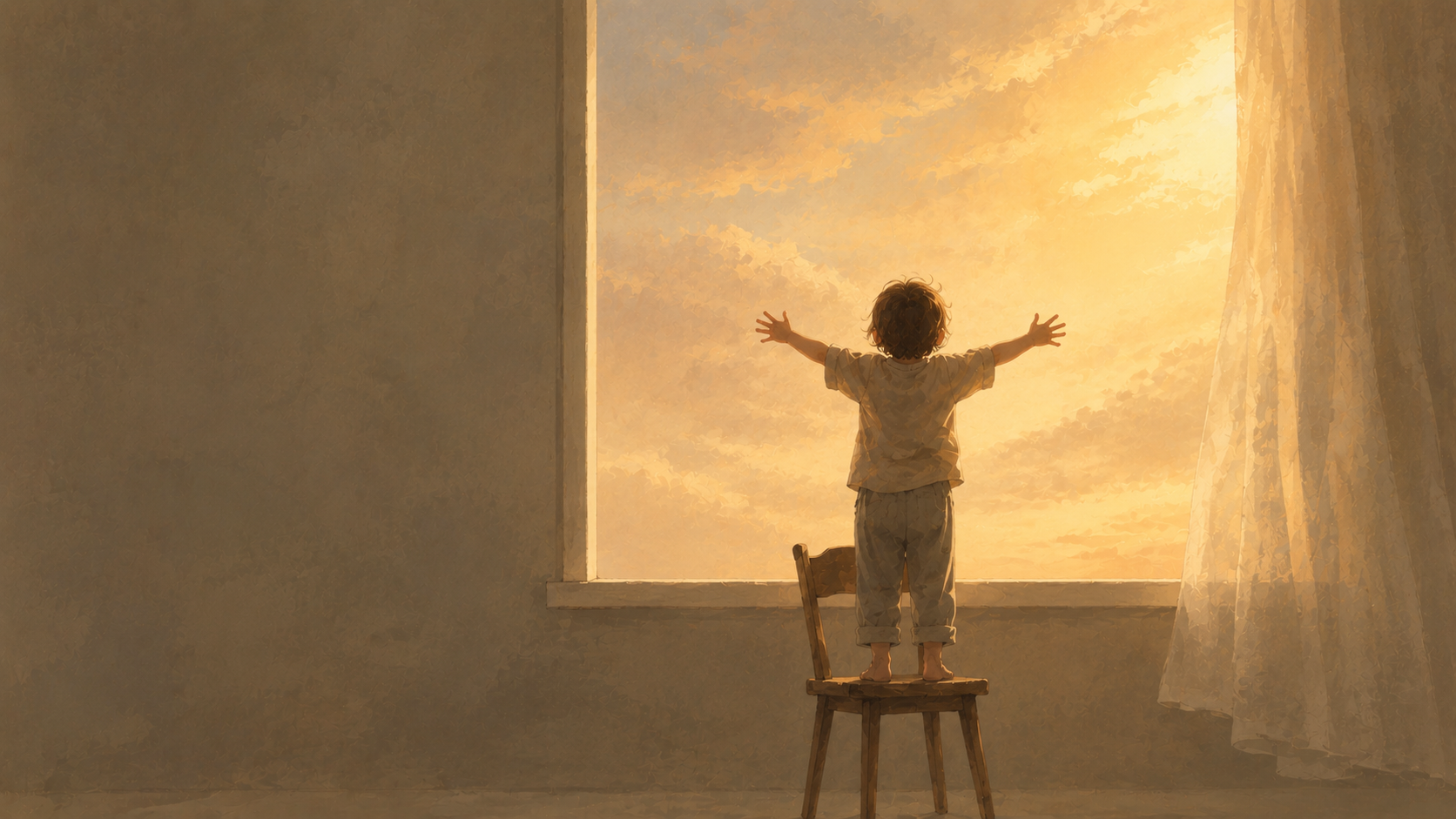
Ask a six-year-old what they want to be when they grow up. Watch what happens. No hesitation, no embarrassment. “An astronaut.” “A footballer.” “The person who invents flying cars.” They’ll stand on a chair to tell you, arms out, completely sure. It doesn’t occur to them to ask whether it’s realistic. They want the moon, so they want the moon.
Now ask an adult the same question. Watch what happens then. A pause. A small laugh, the kind people use to buy time. And then something careful. “I don’t know, something stable.” “Whatever pays the bills.” “I used to want to do music, but you know how it is.”
Same question. Two completely different people. And here’s the thing that gets me — they’re often the same person, twenty years apart.
So what happened in between?
It isn’t you who shuts the dream. It’s society.
It’s easy to think the big dreams just fade on their own, the way baby teeth fall out. A natural part of growing up. But I don’t think that’s what happens. Nobody wakes up one morning and decides, on their own, to want less.
The truth is quieter, and a little sadder. You get corrected. Gently, mostly, and usually by people who love you. You say you want to be an artist and someone asks how you’ll make money. You say you want to build something of your own and someone reminds you how many of those fail. You say the big thing at dinner and the table goes a certain kind of silent. Every response is reasonable. Every single one. And that’s exactly why it works — it never feels like anyone is taking anything from you. It feels like the world teaching you how things really are.
And I don’t think you can really blame the people who say these things. Your parents, your teachers, your friends — they aren’t trying to steal anything from you. They’re passing on exactly what was passed to them: be careful, be realistic, don’t get your hopes too high. They were once kids on a chair too, and someone taught them to climb down. What shrinks the dream isn’t any one person. It’s society — the whole quiet weather we all grow up inside, handed from one generation to the next, each of us breathing it out onto the next without meaning any harm.
That’s the part I want to be clear about. The voice that tells you to shrink the dream almost never starts as your own. It’s the water everyone around you is swimming in. Piece by piece, “what do I want?” gets replaced by “what’s realistic?” — and one day you notice you’re saying it to yourself, in a voice you no longer recognize as borrowed.
An old story about the same thing
There’s a line of thinking about this in The Alchemist, Paulo Coelho’s little book about a shepherd boy who keeps dreaming of treasure waiting for him far away, and has to decide whether to actually go after it or stay where it’s safe. What always stuck with me isn’t the treasure. It’s the idea running underneath it — Coelho calls it your “Personal Legend,” the thing you’re quietly born wanting to do. As children we know it clearly. Then, as we grow, a kind of invisible pressure slowly convinces us that thing is childish, impossible, not for people like us.
The book calls it the greatest lie in the world: that at some point we lose the right to steer our own lives, and just accept what we’re handed. And the reason it lands for so many people is that it isn’t really about treasure or shepherds. It’s about the exact moment you first heard “be realistic” and believed it.
Realistic is often just fear in a nicer outfit
Here’s what took me a long time to see. Once that outside voice becomes your inside voice, you stop noticing it’s there. You just call it being sensible.
But a lot of the time, when I labelled a dream “unrealistic,” I wasn’t doing math. I wasn’t weighing odds. I was afraid — of looking stupid, of trying hard and missing, of the face someone might make when I said the big thing out loud. “Realistic” was just the word that made the fear sound like wisdom. It let me quit before I started and still feel mature about it.
The kid on the chair doesn’t have that word yet. That’s their whole advantage. They haven’t learned to be embarrassed by wanting something huge, or figured out that people might laugh. So they just say it. There’s something almost unbearable about how free that is, once you’ve forgotten how to do it.
Sometimes the dream really can’t happen — and that’s not the point
I want to be honest here, because I don’t think every dream is a plane ticket away. Life is real. Money is real. Some doors close for reasons that have nothing to do with fear — where you were born, who depends on you, a body that won’t do what you ask, timing that simply wasn’t yours. Not every kid who wants the moon gets to go, and pretending otherwise would be a lie of its own.
But keeping the dream alive was never really about reaching the exact thing. It’s about refusing to let the wanting die. The six-year-old’s gift isn’t that they’ll definitely become an astronaut. It’s the spirit — the openness, the nerve, the way they lean toward the world instead of away from it. You can lose the specific dream and keep that spirit. And honestly, that spirit is the thing worth protecting. It’ll find you a new dream if the first one can’t happen. Circumstances can take the destination. They can’t take the way you face the road, unless you hand it over.
The dream doesn’t leave. It waits.
Here’s the part I actually believe, and it’s the reason I wanted to write this.
The dream you got talked out of didn’t disappear. It went quiet. You feel it in strange moments — a documentary about someone doing the thing you once wanted, and a small ache shows up out of nowhere. Someone your age who went for it, and instead of being purely happy for them you feel something sharper. That ache isn’t random. That’s the old dream, still in there, tapping on the glass.
Most people spend a lot of energy explaining that feeling away. It’s too late. I’m too old. I have responsibilities now. All of it might even be true. But notice: none of it makes the ache go away. You don’t have to argue that hard with something that’s actually dead. You only argue like that with something still alive.
There’s a song I keep coming back to — 你曾是少年 by S.H.E, “you were once a youth.” I first heard it while traveling through China, and it stayed with me long after the trip did. It’s a sweet, aching little song about exactly this: the wide-eyed, slightly naive person you used to be, the one who believed the world was his to reach for, before life sanded the edges off. Every time I hear it, it doesn’t feel like a stranger. It feels like someone I used to be, still in there, asking whether I remember him.
You’re allowed to want it again
I’m not going to tell you to quit everything and chase the moon tomorrow. That’s not the point, and usually it’s not the answer.
The point is smaller and harder. It’s letting yourself want the thing again, out loud, without immediately reaching for “realistic” to shrink it back down. Just naming it. “I still want to make things.” “I still want to build something of my own.” “I never stopped wanting to write.” You’d be surprised how long it’s been since some people let themselves finish that sentence.
And it takes a strange kind of courage — not the big, dramatic kind, but the quiet kind. The courage to say the childish, oversized thing and not laugh it off first. To sit with wanting something and not defend yourself against it. That’s the muscle that went slack while you were busy being realistic.
So go find a six-year-old — a real one, or the one you used to be — and ask them what they want to be when they grow up. Listen to how they answer. No pause. No apology. Just the moon, because they want the moon.
You were that person once. The world spent years teaching you to want smaller, and maybe some of the doors really did close. But the spirit that stood on the chair with its arms out was never the world’s to take. It’s still in there. It’s just been waiting, quietly, for you to stop calling it unrealistic and start calling it yours again.